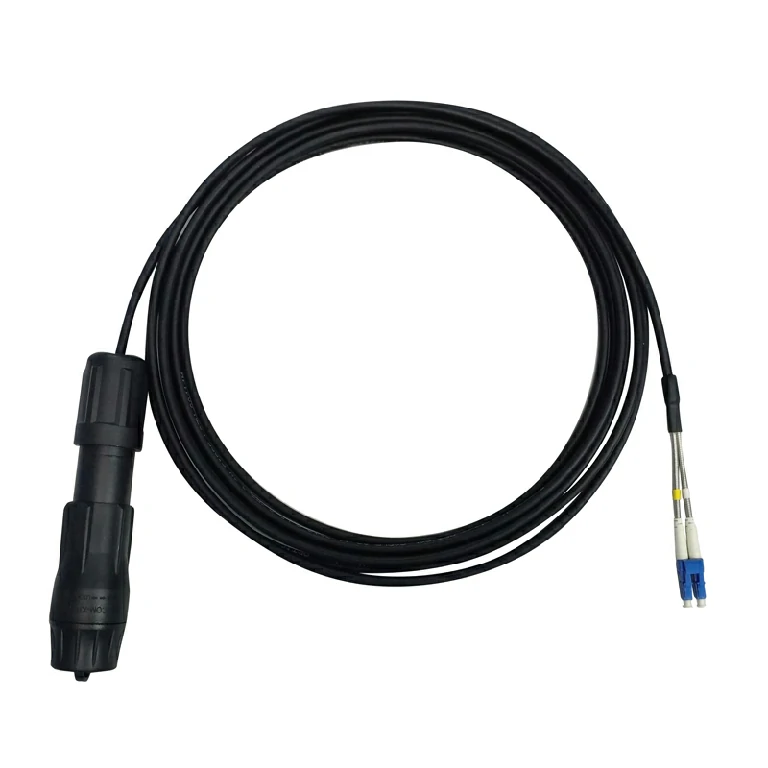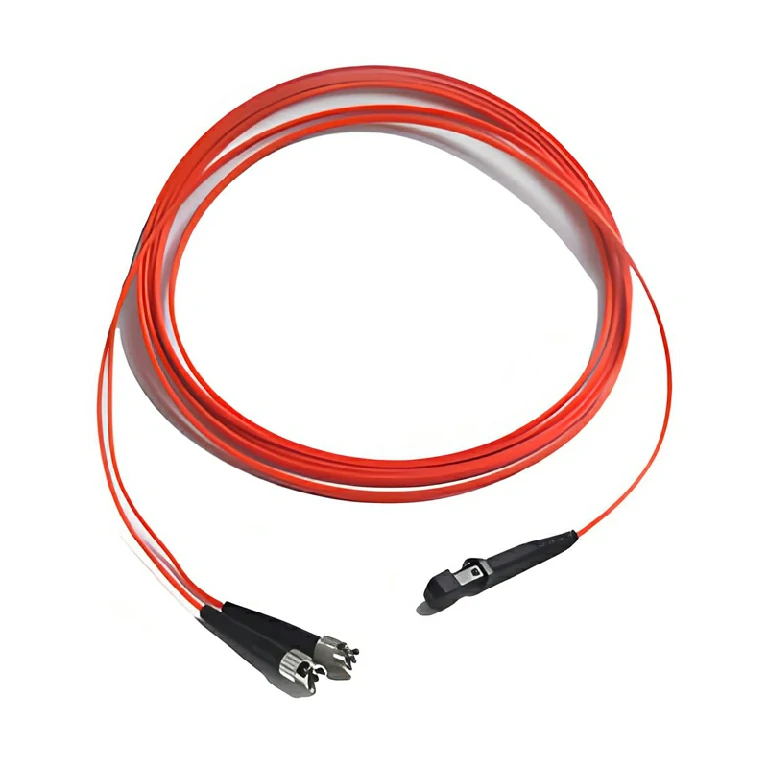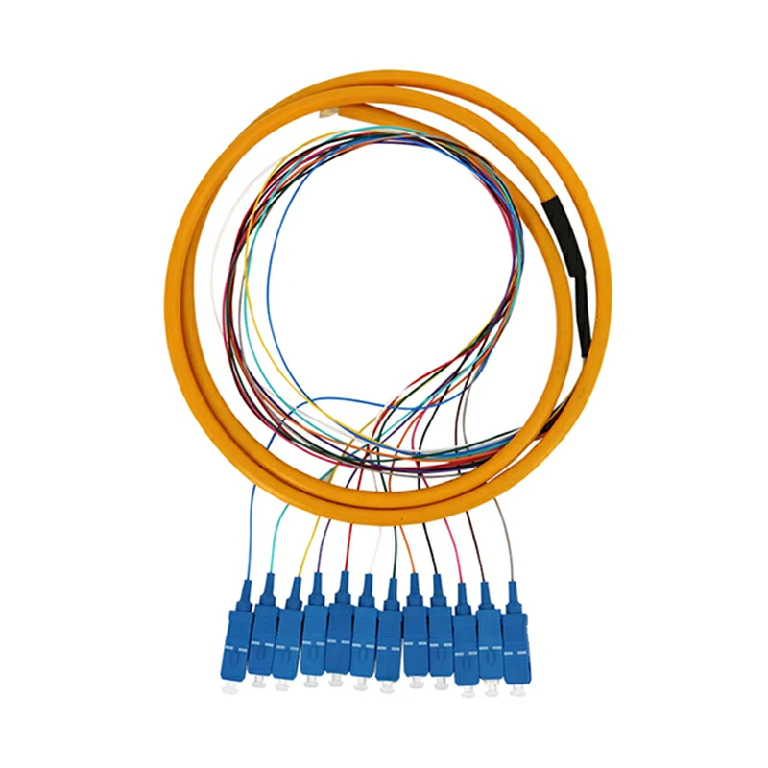
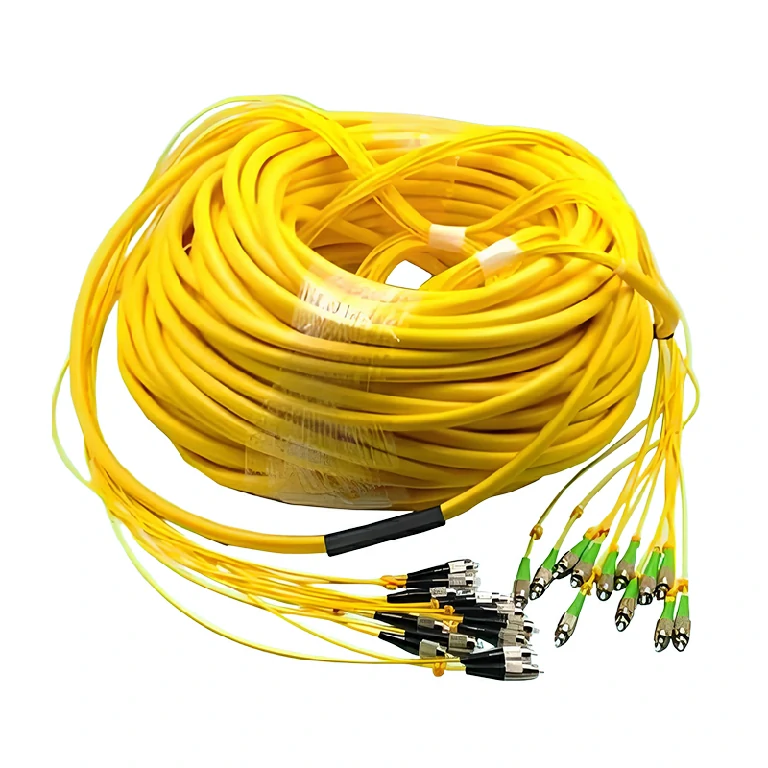
Indoor Bundled Flexible Optical Cable Series Fiber Optic Connectors
Bundled fiber is a multi-core bundle pigtail, ranging from 4-core, 8-core, 12-core to 96-core; It solves the problems of insufficient protection of fiber cores and the need for fixed termination of bundled pigtails when terminating optical cables, replaces the currently widely used single connector termination, and saves optical cable termination boxes. In addition, some bundled fibers are optoelectronic composite cables, which solve the power supply problem of current terminal access, such as indoor distribution remote modules, terminal ONU equipment, etc. Application scenarios: Indoor distribution sites, dedicated line access terminals, docking between buildings and external optical cables for fiber to the home, etc.
Product Features
Sheath Material: PVC or LSZH (Low-Smoke and Halogen-Free);
Fiber Type: G652, G657, etc.;
Sheath Color: Standard yellow, or customizable according to customer requirements;
Technical Parameters
Indoor Cable Technical Parameters (4~12 Cores)
| Model | GJFJV | GJFJV | GJFJV | GJFJV | GJFJV | |
| Number of Fiber Cores | 4 | 6 | 8 | 10 | 12 | |
| Optical Cable Outer Diameter (mm) | 5 | 5 | 5.5 | 5.5 | 6.2 | |
| Short-Term Tensile Force (N) | 600 | 600 | 600 | 600 | 600 | |
| Long-Term Tensile Force (N) | 200 | 200 | 200 | 200 | 200 | |
| Short-Term Crushing Force (N/100mm) | 1000 | 1000 | 1000 | 1000 | 1000 | |
| Long-Term Crushing Force (N/100mm) | 200 | 200 | 200 | 200 | 200 | |
| Minimum Static Bending Radius (mm) | 55 | 55 | 65 | 65 | 65 | |
| Minimum Dynamic Bending Radius (mm) | 110 | 110 | 130 | 130 | 130 | |
| Operating Temperature (℃) | -20℃~+60℃ | -20℃~+60℃ | -20℃~+60℃ | -20℃~+60℃ | -20℃~+60℃ | |
| Maximum Attenuation Value (dB/km) | 1310nm | 1 | ||||
| 1550nm | 0.75 | |||||
| 62.5/125μm | 850nm | 3.75 | ||||
| 1300nm | 1.5 | |||||
| 50/125μm | 850nm | 3.5 | ||||
| 1300nm | 1.5 | |||||
Solutions
We provide professional optical fiber communication solutions tailored to different industries and application scenarios.
FTTN (Fiber to the Node)
The FTTN (Fiber to the Node) solution involves laying optical fibers to node cabinets several miles away from users, then transmitting network signals to user terminals via traditional copper cables. It is an ideal choice for meeting the broadband upgrade needs of urban areas or communities, and is suitable for access requirements in small and medium-sized regions.
Application
Urban and Peri-Urban Areas
Major Residential Areas and Communities
FTTC (Fiber to the Curb)
FTTB (Fiber to the Building)
FTTH (Fiber to the Home)
FTTP (Fiber to the Premises)
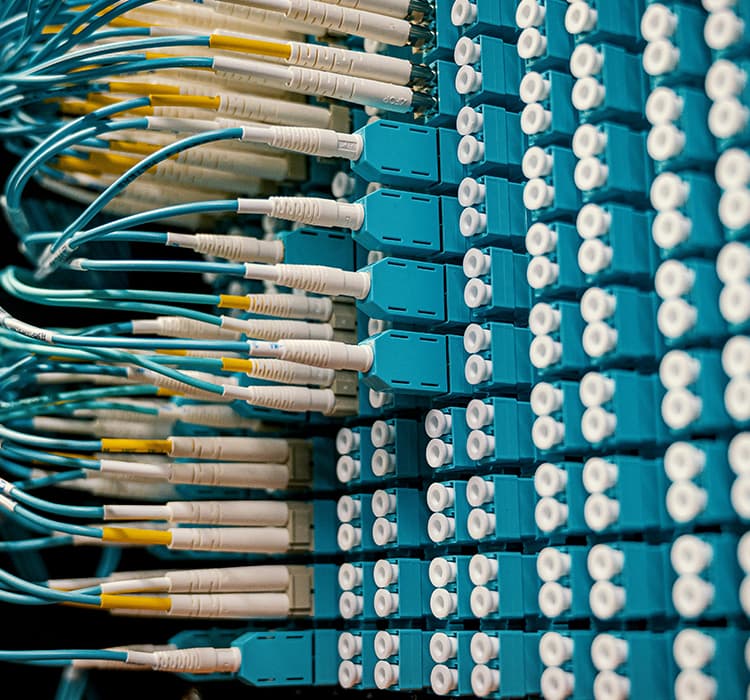
Adapts to Multi-user Needs
For large buildings, providing fiber access throughout the entire building
Highly Reliable
Provides stable high-speed internet connections, meeting high-demand commercial and residential usage
Highly Scalable
Supports future expansion and flexible service distribution
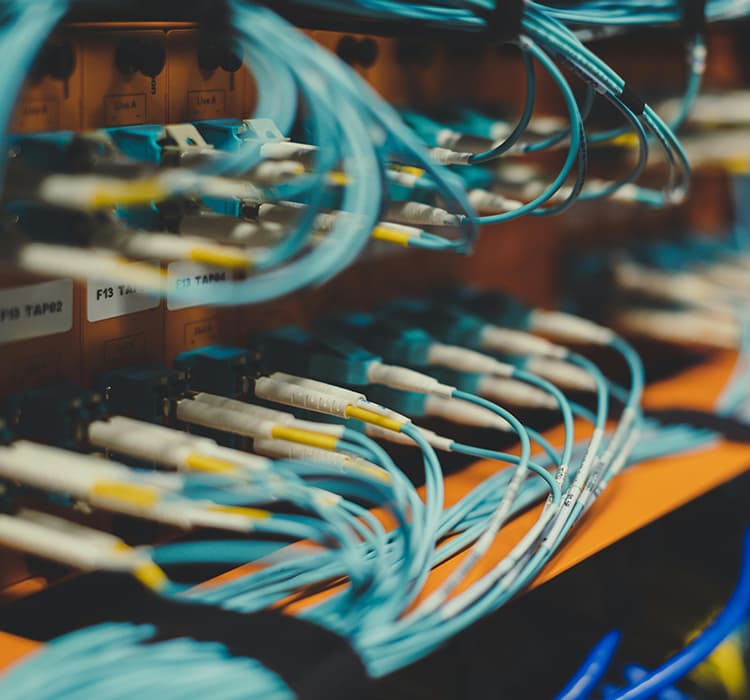
Ultimate Access Speed
Fiber reaches the curb, closer to users, providing higher bandwidth and lower latency
Flexible Deployment
Adapts to flexible cabling needs in urban and densely populated areas
High Bandwidth Guarantee
Through fiber network connections, meeting high-bandwidth application needs such as HD video and cloud computing
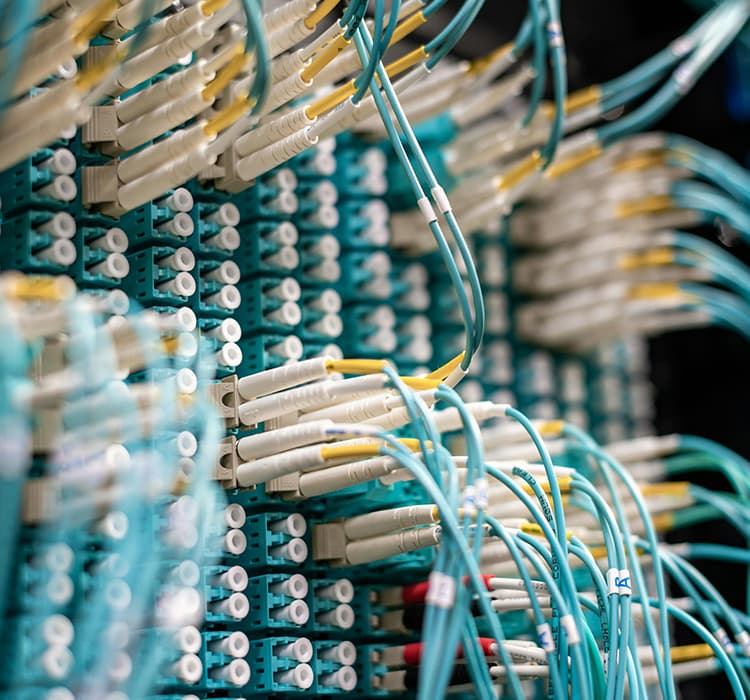
Meet Diverse User Needs
Tailor full-building fiber access solutions for large-scale constructions
High Reliability
Deliver stable, high-speed internet connectivity to meet the demands of high-performance commercial and residential use.
Strong Scalability
Support future expansion and flexible service allocation
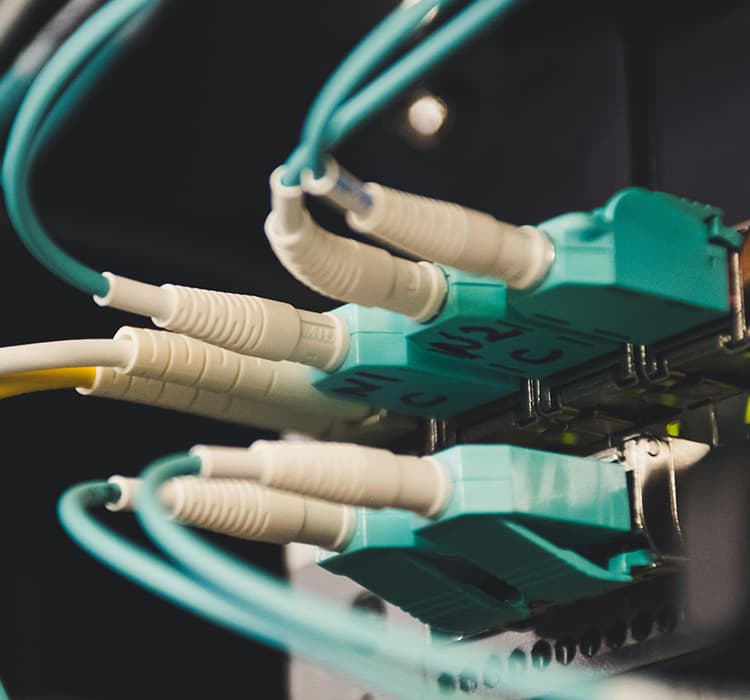
Ultra-high-speed Internet
Direct access to fiber networks, achieving gigabit-level bandwidth, supporting bandwidth-intensive applications such as HD, 4K video, VR/AR
High Stability
No electromagnetic interference, fiber connections ensure communication stability
Future Scalability
As demand grows, fiber networks can seamlessly expand to meet increasing bandwidth needs
Wide Coverage
Integrating FTTH and FTTB solutions to meet the needs of various customers including homes and enterprises
High Bandwidth Guarantee
Provides excellent network experience, supporting cloud applications, high-volume video transmission, etc.
One-stop Service
Comprehensively considers user scenarios, provides flexible fiber deployment solutions, ensuring seamless connectivity