
![[Group News] Leaders from Gansu Mobile Paid a Visit for Exchange and Guidance](/d/file/efpub/20250919/5e3579e7820f5f53c8128cbf6290f358.jpg)
In a Passive Optical Network (PON), "passive" means that the Optical Distribution Network (ODN) does not contain any electronic devices or active electronic equipment, and is composed of passive components such as optical splitters. It can be seen that optical splitters are of great importance in PONs. So what exactly is an optical splitter? How is it applied in PONs?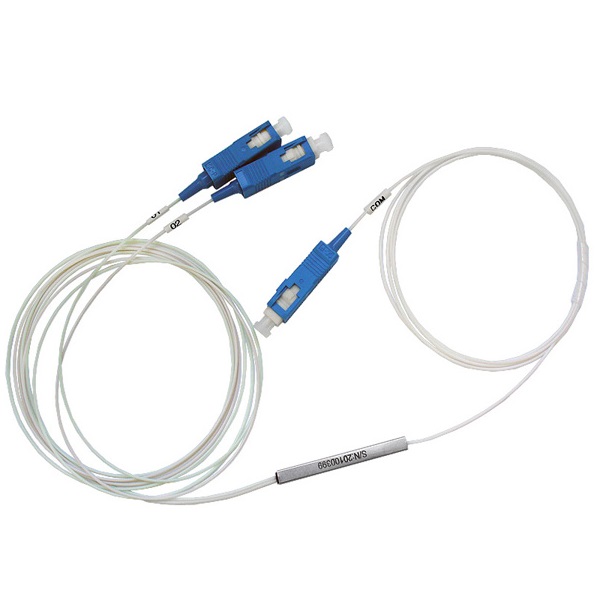
What is an Optical Splitter?
An optical splitter, also known as a fiber splitter or passive optical splitter, is a core optical device that distributes a beam of light to multiple optical fibers. It is usually used in PONs to split the transmitted optical signal in one fiber to multiple end users in a certain ratio, enabling multiple end users to share one PON interface.
Application of Optical Splitters in PONs
Generally, when purchasing optical splitters, we will see various 1×N types such as 1×2 and 1×4. This is because optical splitters have multiple input and output ports. Thanks to this feature, optical splitters are often used in PONs to provide optical transmission channels for the network-side Optical Line Terminal (OLT) and user-side Optical Network Unit (ONU). In the PON structure, the layout of optical splitters needs to comprehensively consider factors such as community structure, user density, and corridor distribution to achieve efficient construction. When buildings are scattered and irregular (such as villa distributions) with long distances and low user density, the centralized light splitting method can fully utilize resources to cover the surrounding area.
With the continuous development of PON technology, passive optical network systems will become more and more common in the future. As one of the important components of passive optical network systems, optical splitters are indispensable.
——END——