
![[Group News] Leaders from Gansu Mobile Paid a Visit for Exchange and Guidance](/d/file/efpub/20250919/5e3579e7820f5f53c8128cbf6290f358.jpg)
An attenuator is a circuit used to introduce a predetermined attenuation within a specified frequency range. It is generally marked by the decibel number of the introduced attenuation and the ohm number of its characteristic impedance. So what is an attenuator? What are the precautions for using an attenuator?
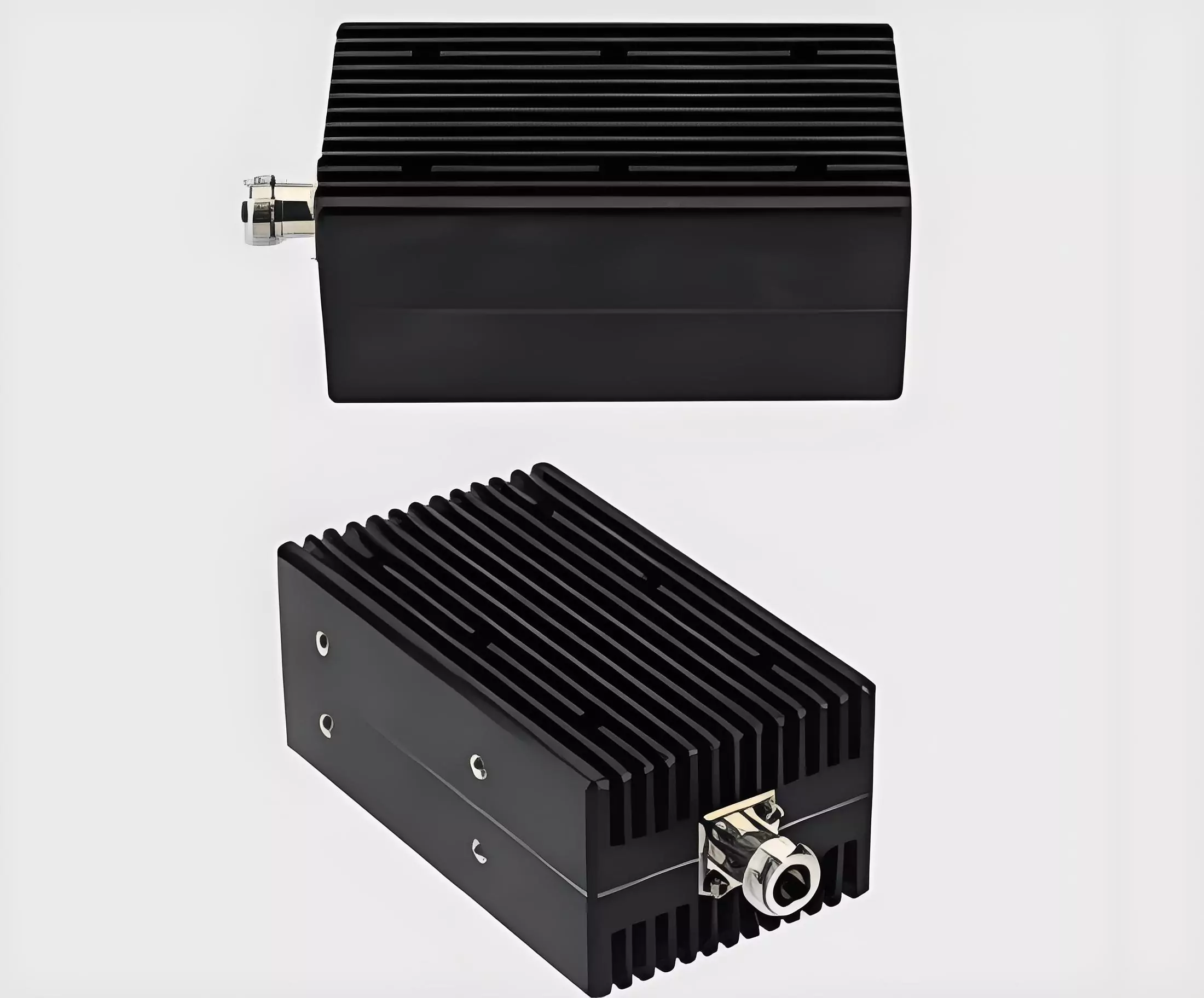
I. What is an Attenuator?
An attenuator is an electronic component that provides attenuation, widely used in electronic equipment. Its main purposes are: (1) Adjusting the magnitude of signals in circuits; (2) In comparison measurement circuits, it can be used to directly read the attenuation value of the measured network; (3) Improving impedance matching—if certain circuits require a relatively stable load impedance, an attenuator can be inserted between the circuit and the actual load impedance to buffer impedance changes.
II. What are the Precautions for Using Attenuators?
1. Frequency Response: Also known as frequency bandwidth, usually expressed in megahertz (MHz) or gigahertz (GHz). General-purpose attenuators typically have a bandwidth of around 5GHz, with the maximum reaching 50GHz.
2. Attenuation Range and Structural Form:
Attenuation range refers to the attenuation ratio, generally 3dB, 10dB, 14dB, 20dB, etc., with the maximum up to 110dB. The attenuation formula is: 10lg (Input/Output). For example: 10dB indicates Input∶Output = Attenuation Multiple = 10 times.
Structural forms are generally divided into two types: fixed-ratio attenuators and step-adjustable attenuators. Fixed attenuators refer to those with a fixed ratio within a certain frequency range. Step attenuators are adjustable in equal intervals with a fixed value (e.g., 1dB), further divided into manual step attenuators and programmable step attenuators.
3. Connector Type and Connection Size:
Connector types include BNC, N, TNC, SMA, SMC, etc., and each connector has two genders: female and male.
Connection sizes are available in metric and imperial forms, determined by usage requirements. If multiple connector types need to be connected, corresponding adapter connectors can be used, e.g., BNC-to-N adapters.
4. Attenuation Indicators:
Attenuation indicators have multiple requirements, mainly including attenuation accuracy, power handling capacity, characteristic impedance, reliability, repeatability, etc.
The above is an introduction to attenuators and related precautions. If you have any other questions, welcome to consult Huijue Technology.
——END——